4.1.3 Wetting and Polarity
4.1.3 Wetting and Polarity
Surface energy is the degree of attraction or repulsion exerted by the surface of one material to another (measured in mN/m or outdated dyn/cm). Surface tension is a liquid’s resistance to surface penetration, which allows the liquid to behave like a thin elastic film. The wetting theory states that adhesion results from the surface forces of molecular contact. In the ideal bonding condition, a substrate has high surface energy, i.e. the surface has the capacity to attract, and the adhesive has a low surface tension, i.e. low resistance to deformation or breakage. This results in the adhesive properly wetting the substrate and forming a strong bond.12 Surface preparation for bonding frequently increases the surface energy of a substrate to improve bond strength.
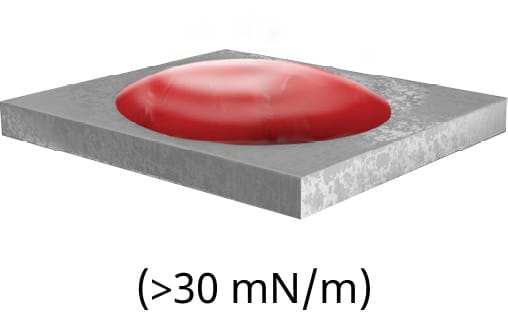
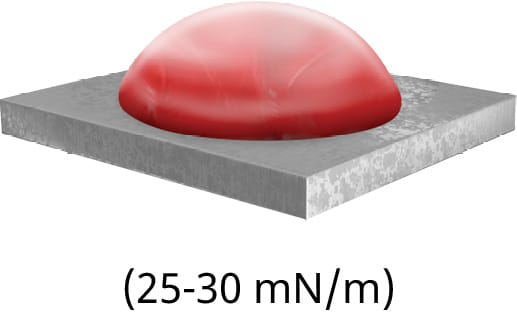
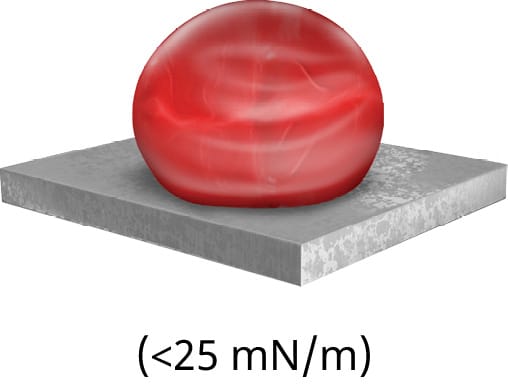
12) S. Ebnesajjad, Handbook of adhesives and surface preparation, Technology, Applications and Manufacturing (2011).
GET FREE ACCESS
TO THE DIGITAL MANUAL
Advance Your Technical Proficiency - Dive into Expert Knowledge
in Industrial Bonding.

Already have an account? Sign in here.