
2.2.1.1.1 Aluminium and Anodised Aluminium
2.2.1.1.1 Aluminium and Anodised Aluminium
Figure 18 Examples of aluminium semi-finished products
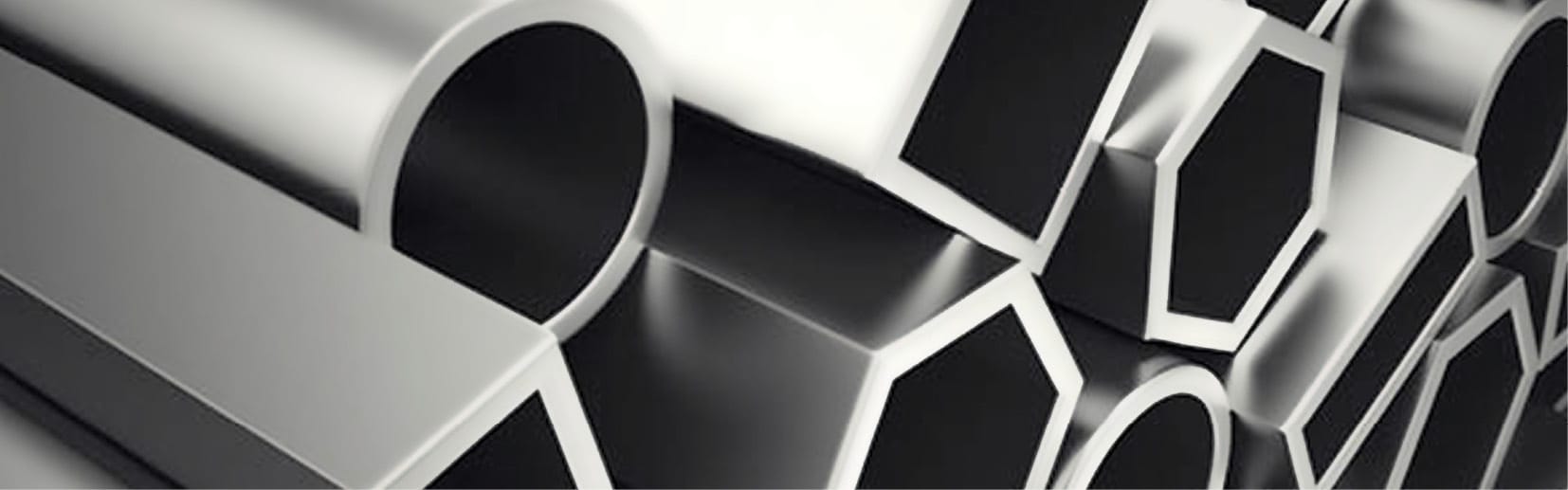
Aluminium and its alloys are the most widely used nonferrous metals because they offer the benefits of corrosion resistance, versatile and desirable aesthetics, ease of fabrication, low density, and high electrical and thermal conductivity. Limitations of these metals include low fatigue and wear resistance, a low melting point and lower modulus of elasticity compared to most ferrous alloys. However, aluminium and its alloys generally have good corrosion resistance due to a reaction with oxygen that forms a hard, microscopic aluminium oxide layer inhibiting a reaction between corrosive elements and the base aluminium alloy. Whilst this oxide layer offers benefits such as corrosion resistance, it can reduce the surface adhesion of the aluminium or aluminium alloy and, without appropriate preparation, adversely affect subsequent processes such as adhesive bonding, painting and coating.
Anodising processes build up the oxide layer, formed through a reaction with oxygen, to create a thicker, protective coating which is tightly bound to the base aluminium alloy. The resulting aluminium oxide layer can offer electrical insulation, protection from corrosion, improved abrasion resistance, a lasting decorative finish and a stable surface for bonding, coating or other secondary operations.
GET FREE ACCESS
TO THE DIGITAL MANUAL
Advance Your Technical Proficiency - Dive into Expert Knowledge
in Industrial Bonding.
Already have an account? Sign in here.