
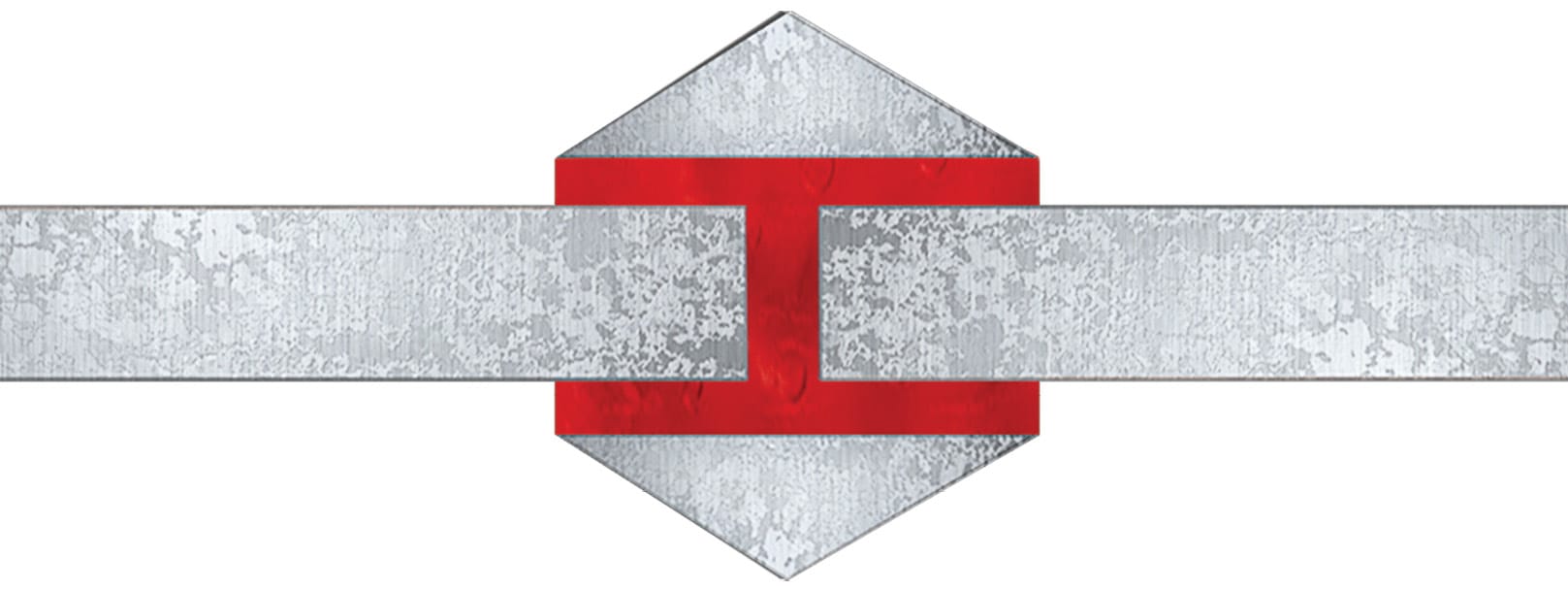
5.1.3.9 Bevelled Double Strap Joint
Similar to the double strap joint, a bevelled double strap joint is made by adding a strap or belt to an adhesive bond line. The reinforcing straps will have a chamfer or bevel on both ends, which provides high flexural strength and better stress distribution. The critical function of the bevel is to prevent external assemblies from ‘catching’ the edge of the strap and applying peel forces. The mechanical processing required to create this joint is moderately complex. It should only be used if the bond is subject to materials sliding over the surface on the bonded substrates.
5.1.4 Non-Planar Substrates
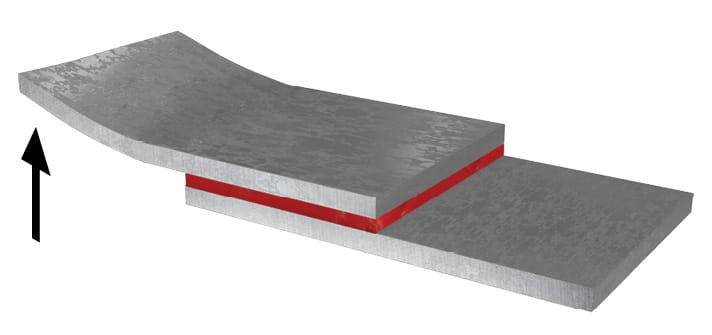
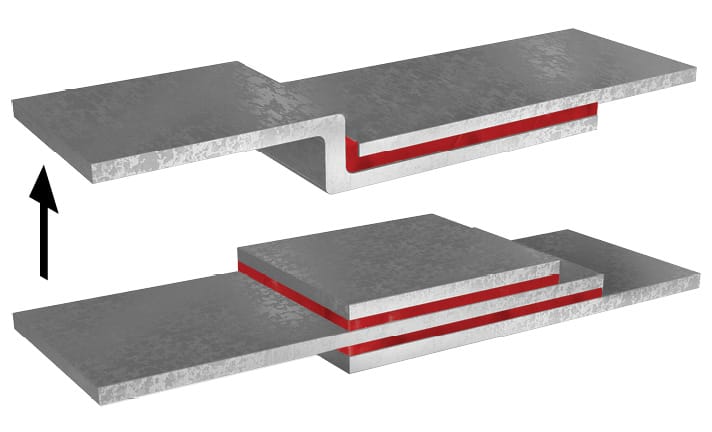
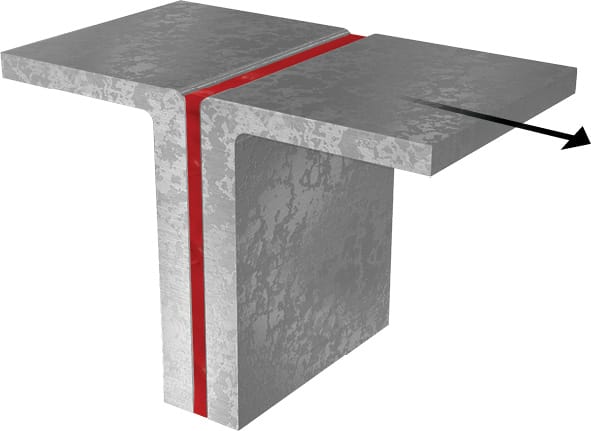
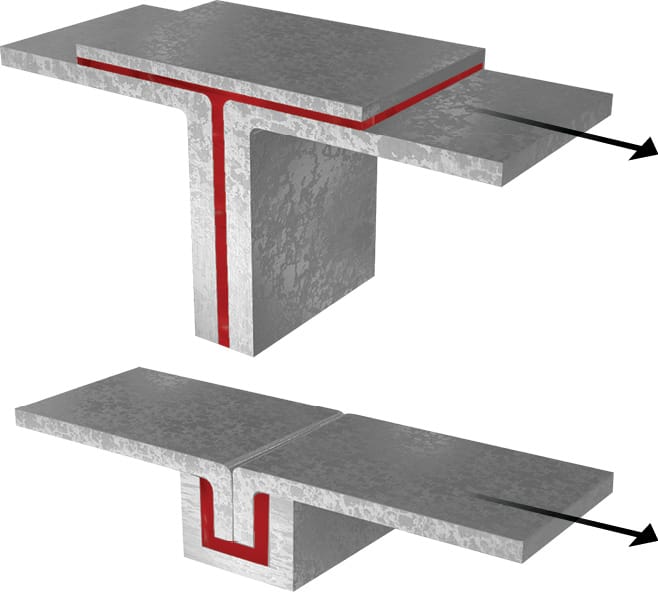
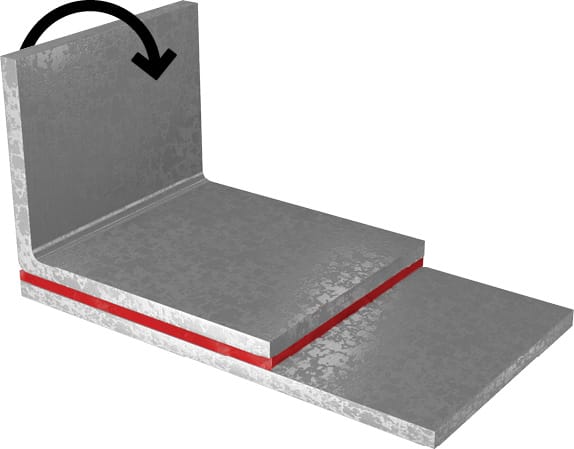
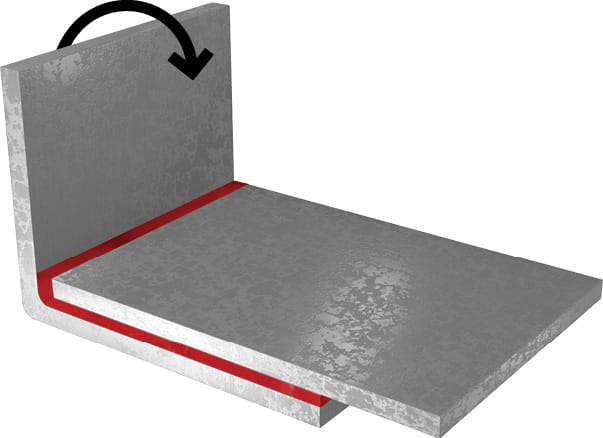
Mitigating stresses is more challenging when bonding with non-planar substrates. Angles created by non-planar substrates can lead to counterintuitive solutions, as the expected forces may not stress the joint as expected. It is important to choose the most suitable joint for the application based on the types of stresses acting on the bonded joints; in other words, forces and stresses should be considered first, with the joint designed around the expected forces and stresses. Particularly with right angles (90° angles), peel forces may impact the assembly in unanticipated areas. As discussed in Section 4, it is crucial to avoid peeling cleavage forces, as these are the most common forces that lead to failure. Figure 117 shows some of the most common peeling loads in non-planar assemblies and some possible design solutions to change the type of stress. This is not a comprehensive list, but rather a representative sample of the most common peel forces.
| PEELING CLEAVAGE LOAD | POSSIBLE DESIGN SOLUTIONS |
 |  |
 |  |
 |  |
GET FREE ACCESS
TO THE DIGITAL MANUAL
Advance Your Technical Proficiency - Dive into Expert Knowledge
in Industrial Bonding.
Already have an account? Sign in here.